Don’t wake up 20 minutes before a meeting 20 minutes away.
Amazingly, not even our breakneck fast-walk could beat Google Maps’ walking time estimate—we got to the Pontifical Gregorian University ten minutes late, prepared to meet with Fr. Rene Micallef, a Catholic Social Ethics professor whose research focused on current migration policy.
Inside, we admired the majestic marble columns outlining a bright indoor foyer, where conversations in Italian, Spanish, and English echoed across the floor. Fr. Rene met us downstairs and brought us to his office, five floors up in an adjacent building. The window was open but classes were in session, so it was quiet inside.
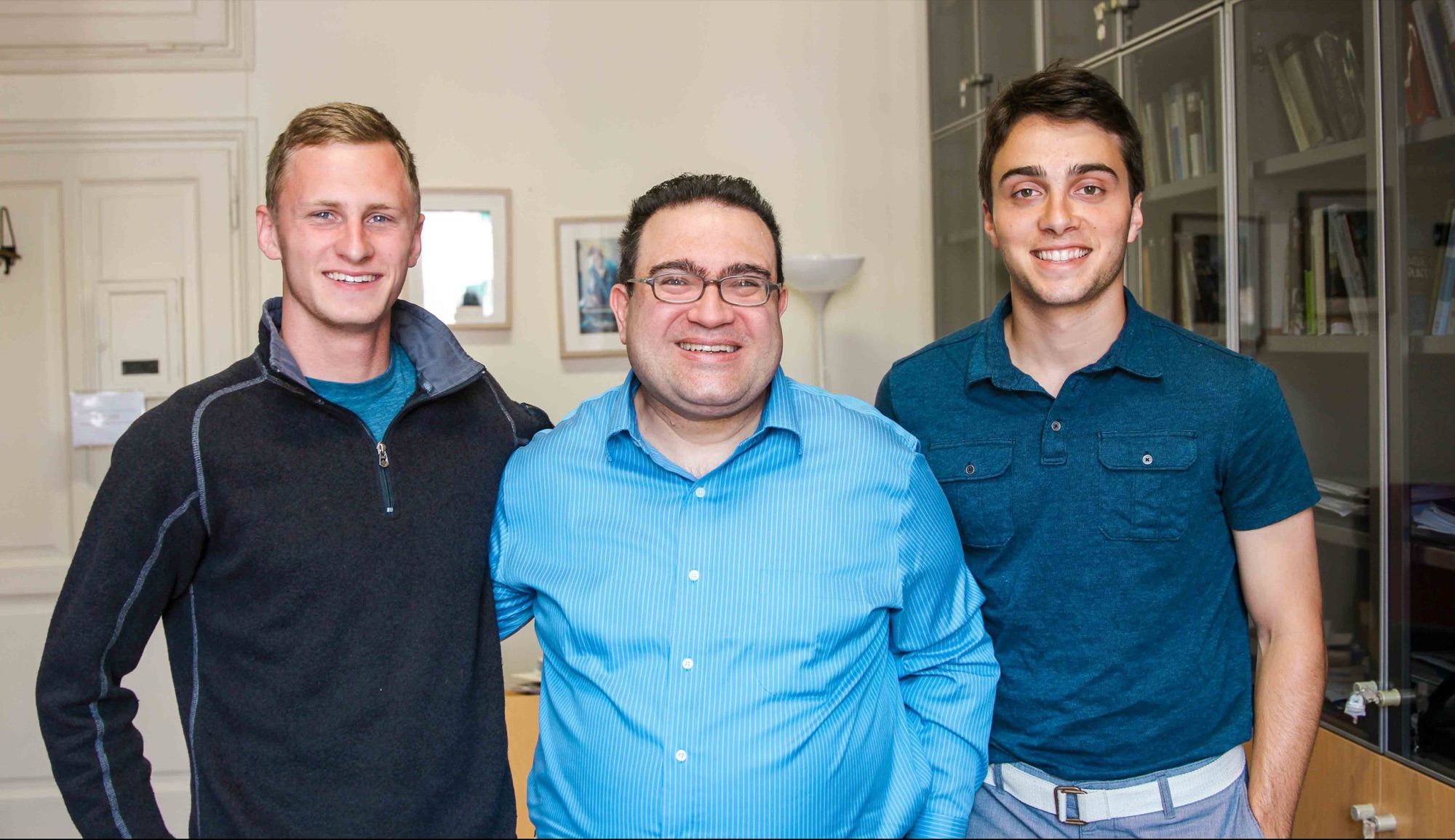
The first and only question I asked prompted an hour and half uninterrupted response from Fr. Rene, who had written a 100+ page thesis on the diplomatic shift in the Church’s message about migration. He cited four major Church documents as well as Geneva Conventions for forming current ideas about migration ethics.
Politics Always Comes Back to Migration
“Governments have little control on the economy, but some on borders, making it a major issue in elections,” Fr. Rene explained. Many nationalist and populist parties use the refugee crisis as a way to generate discontent and anger while pushing aside issues upon which they feel they have very little substantial impact, such as endemic economic issues. It’s difficult to realistically balance the right of refugees to enter country with the closely-held concerns of Italian citizens.
A Delicate Balance
Real Fears
Fr. Rene acknowledged that there is legitimate fear and anger on the ground by people who have lost jobs to immigrants or whose life has been affected by the influx of people from a new culture. He spoke about the fear of Islam, short-term economic strains, and rise in violence in some areas associated with increased migrants.
On a practical level, he said, “Citizens will say that a refugee student struggling in Italian and drawing the teacher’s attention is taking away from their child’s education or that there’s slower service at the local clinic.”
Real Benefits
On the other hand, Fr. Rene stressed that there was universal agreement about the positive economic effect of immigration. In many countries in Europe, the average age is increasing at an unsustainable rate. Welcoming forced migrants into the workforce will likely be beneficial in addressing this issue and provide much-needed support to a crumbling the pension system.
Percent of Italian population older than 60
Source: UN Population Division, World Population Prospects (2010)
He reiterated that the movement of developing countries toward middle-income populations may assist in this effort. When third-world countries become stable enough for families to begin saving and move into a middle-class economic bracket, there is a dramatic increase in economic emigration out of the country. Families are suddenly able to consider the possibility of relocating their livelihood a different country where they can make full advantage of their skills. We have seen this effect already in Eastern Europe, and Africa is trending toward the same rapid development which will likely cause millions of more people to move to developed countries across the Mediterranean. Eventually, this shift will equalize the labor force, but it can take 20-30 years.
For the time being, however, Italy is overwhelmingly receiving refugees- not economic migrants- from Africa.
Key Dates
- 1951
- Shift in refugee definition: individual determination, must prove personal persecution
- 1973
- Shift in Italy from net migrant-sending to net migrant-accepting country
This is the fine line upon which the European refugee crisis hangs. Significant cultural barriers stand in the way of citizens accepting the economic benefits of refugee integration that exist on paper. He emphasized that these were not insurmountable obstacles and that while institutional structures can foster some understanding in the people, the most understanding come when people must meet face-to-face. “Simply insisting on the rights of migrants workers does not work, they need to speak with these people,” he said.
According to Fr. Rene, this explains why Pope Francis’ recent actions have been so groundbreaking–he has offered gestures of hospitality, encouraging Europeans to welcome migrants into their midst.
I think this Pope’s message is that we could do more not just on an institutional level but also on a personal level, meeting people face to face in our parishes and our homes, making them feel welcome and helping them see they can be part of our society and they can be part of our future as fellow citizens.
This is why the work of non-governmental organizations in integrating refugees is so important. Fr. Rene explained that history has shown that certain migrant cultures assimilate more quickly if they have strong family unity, a patriarchal structure, and a focus on education and savings. NGOs seek to address these very needs and treat each individual in a case-by-case basis.
More than just food and shelter, offering psychological help is of particular importance. While many refugees may seem to settle into their new lives, they may still have not fully coped with the extreme realities of their past experiences or the trauma of their journey. He explained that it is not uncommon to see surprising outbursts of despair or violence which can be attributed to untreated PTSD. By addressing these themes in full, a community or non-governmental organization can prevent the negative generational effects of assimilation as well.
“Typically, even if the third generation speaks the native language perfectly and understands cultural norms, they will search to revert back to the culture of their grandparents if they do not feel welcomed by the community.” He went on to explain that this frustration can lead young people to look for a cause, which they find in the cover of religion, most recently Muslim fundamentalism. “Within 50 to 100 years, they will likely be completely integrated, but the question is what are we going to do in the meantime.”
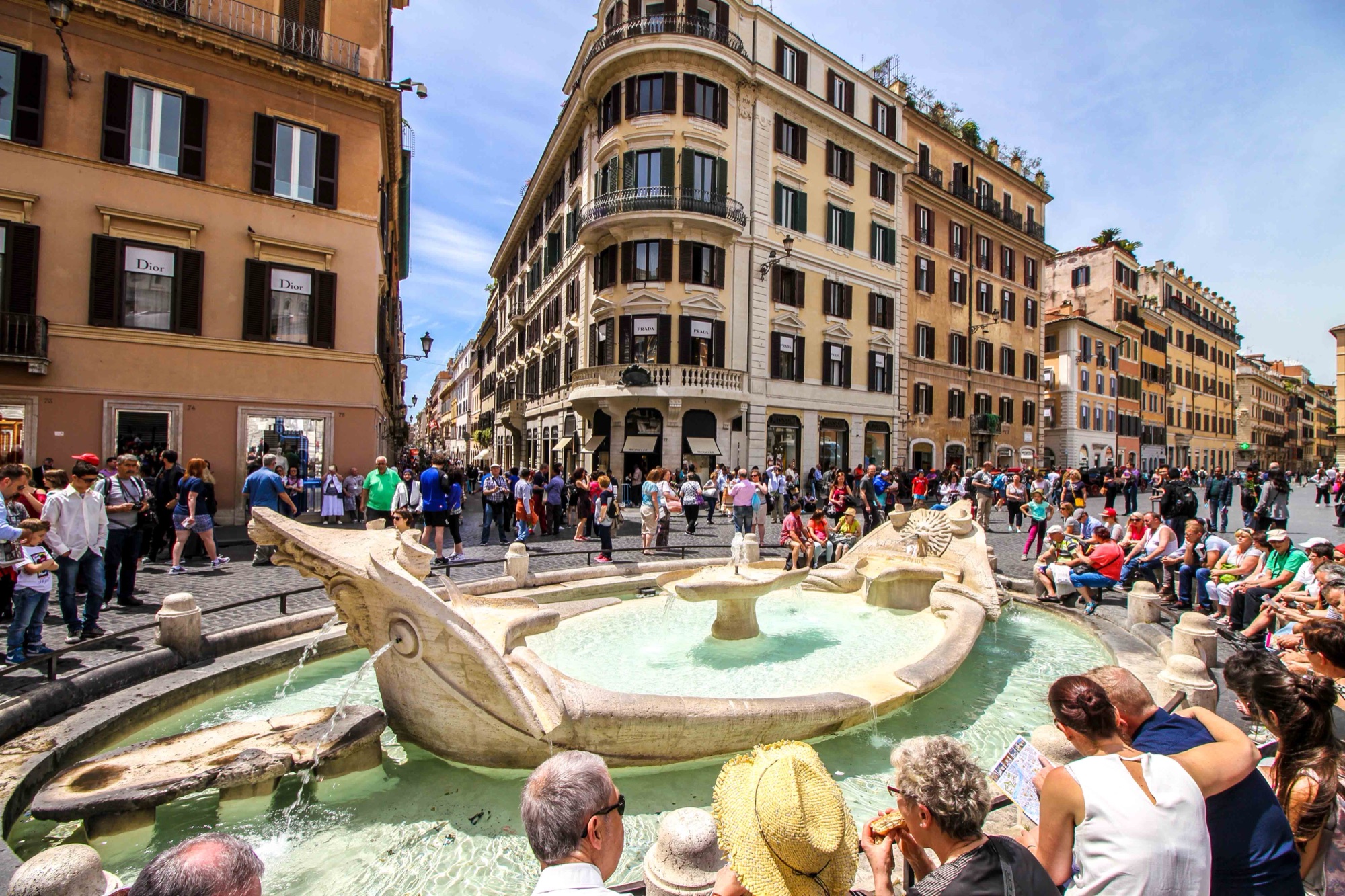
After our meeting, we headed to the nearby Trevi Fountain and Spanish Steps, which were both packed on such a warm, sunny day. I convinced Soren and Nick they had to see the McDonald’s here and they reluctantly agreed. In a moment of weakness (we hadn’t eaten all day), I ordered a double cheeseburger and some fries. That burger paled in comparison to the authentic Italian oven-baked pizza I ordered 20 minutes later in a nearby pizzeria. Lesson learned.